
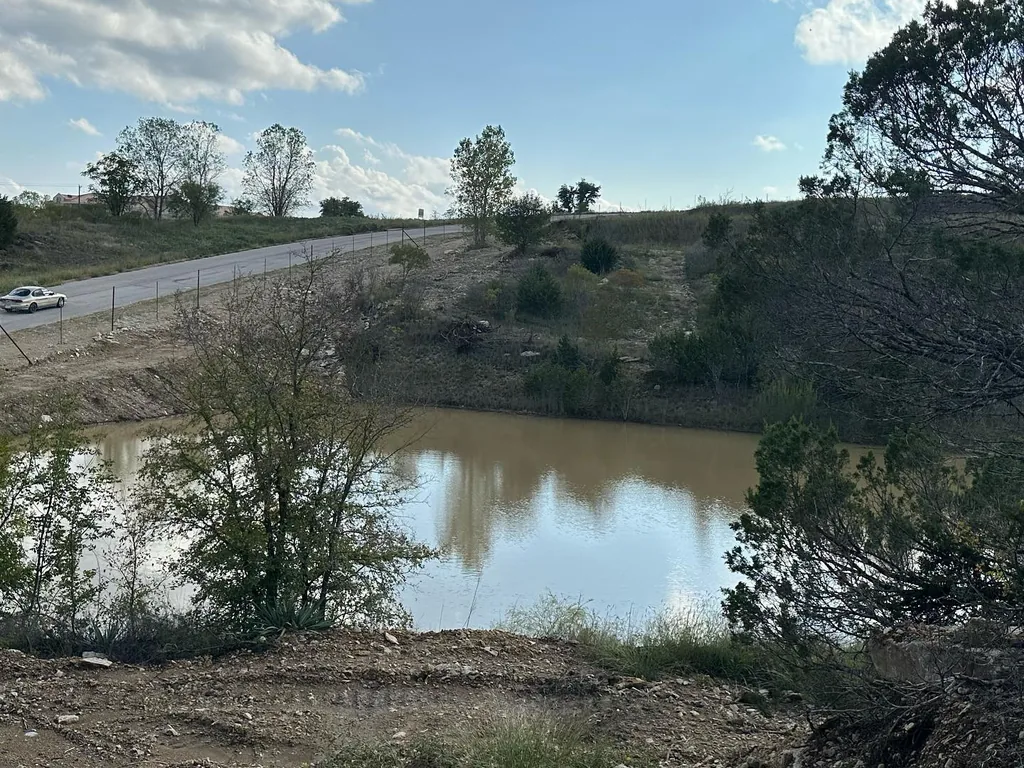
How Much Does It Cost to Build a Pond in Texas?
One national cost guide puts the cost to build a pond at $2,900 to $15,600 on average. Its table runs about $3,000 to $15,000 for a 1-acre pond and $12,000 to $60,000 for 4 acres. The same guide lists a farm pond at $3,000 to $23,000.
Measured by the dirt moved, that guide puts digging a large pond at $1.50 to $4.00 per cubic yard. Stock tank is the Texas word for a farm pond, so these ranges cover both. They are market numbers, not our price list.
A pond is a drainage job at heart. It fills from the runoff above it, and its overflow needs a safe path past the dam. We build stock tanks and ponds as part of our site drainage work, and we put each quote in writing.
What are the market ranges to build a pond?
The table draws on one national cost guide. It prices the whole country, so a Texas pond can land above or below a row.
| Pond size or line item | Market range |
|---|---|
| 1/4 acre pond | $1,800 to $8,100 |
| 1/2 acre pond | $2,400 to $11,600 |
| 1 acre pond | $3,000 to $15,000 |
| 2 acre pond | $6,000 to $30,000 |
| 4 acre pond | $12,000 to $60,000 |
| 10 acre pond | $15,000 to $70,000 |
| Farm pond | $3,000 to $23,000 |
| Ponds under 10 acres, per acre | $3,000 to $15,000 |
| Lakes of 10 acres and up, per acre | $1,200 to $6,800 |
| Digging a large pond, per cubic yard | $1.50 to $4.00 |
| Geotechnical soil report | $1,000 to $5,000 |
| Land clearing, lightly wooded, per acre | $1,200 to $8,000 |
| Land clearing, heavily wooded, per acre | $7,000 and up |
How do size and depth change the cost to dig a pond?
Size sets how much dirt moves. The national cost guide says farm ponds are typically 1/4 acre to 5 acres and 6 to 12 feet deep. It notes that larger, deeper ponds require more equipment, labor and materials.
Depth earns its cost in Texas. One extension guide says a dam must be high enough to compensate for continuous evaporation and seepage. Texas heat and drought pull water off a tank all summer, so a shallow tank goes dry first.
Bigger ponds cost less per acre, as the per-acre rows in the table show. The cost guide says smaller lakes cost more per acre due to the equipment and material transportation costs.
Why does the soil decide whether a pond holds water?
A pond holds water only when the ground under it does. The extension guide says a good site has soil with sufficient clay to hold water. It calls clay soils best for lining ponds because they minimize leakage.
Sand and gravel are the trouble spots. The same guide calls sites with gravel or sandy soils unsuitable, often requiring costly earth moving. The cost guide agrees that rocky or sandy soils are not ideal for ponds.
Test holes or a soil report show whether the clay is there before digging starts. The cost guide puts a geotechnical soil report at about $1,000 to $5,000.
What goes into the dam and the spillway?
The cost guide notes that sloped land typically requires an embankment or dam. The extension guide lays out the order of the work.
The site is cleared of trees and brush, and the topsoil comes off. Then a core trench is dug under the dam. Once the trench is filled with high quality clay soil, the guide calls for a drain pipe with anti-seep collars.
Next the dam goes up in thin, well-packed layers of clay, called lifts. Dozers and excavators move the dirt, and a compactor packs each lift. The guide calls filling the dam the most expensive operation in pond construction.
The spillway carries storm water around the dam. The guide says inadequate spillway capacity is the main cause of earthen dam failure. It ties spillway size to the drainage area, the land that sheds water into the pond.
How do clearing, access and the dirt add up?
Clearing comes first, and the clearing rows in the table show what trees can add. Clearing a wooded draw is its own land clearing job, priced on its own lines.
Machines need a way in. Per the cost guide, labor costs more on a site difficult to reach with a truck or other large equipment.
The dirt has to go somewhere. On an excavated pond, the extension guide says the dug dirt can form the levees. It adds that level topography will minimize the need for costly soil removal.
The cost guide notes that whether the dirt is staying onsite or being dumped elsewhere changes the cost. Spreading the extra dirt and shaping the ground around a tank is land grading work.
Do you need a permit to build a pond in Texas?
A stock tank on your own land may not need one. Texas Water Code 11.142 lets a landowner build a dam or reservoir on their own property without a permit. The limit is a normal storage of not more than 200 acre-feet of water for domestic and livestock purposes. This exemption does not apply to a commercial operation.
An acre-foot is one surface acre of water, one foot deep. A tank of 5 acres at 12 feet deep tops the cost guide’s farm pond range. It still holds far less than 200 acre-feet.
Texas also has a dam safety law, Water Code 12.052. It exempts the owners of some private dams from its requirements, if the dam meets every condition. Two of them: less than 500 acre-feet at maximum capacity, and a site outside city limits.
A bigger dam, a dam across a creek or a pond in a floodplain can raise more questions. The state and the county or city answer those, and we point you there before work starts.
What should a written quote for a pond cover?
Two pond quotes only compare when they name the same work. The extension guide says to estimate the fill for the dam and the cost of moving the dirt first. Ask each quote to spell out these pieces:
- The pond’s surface size and its deepest point
- Test holes or a soil report, and who pays for them
- Clearing the site and stripping the topsoil
- The core trench and the clay that fills it
- The dam, built in compacted lifts, and its height
- The spillway, and where the overflow runs
- A drain pipe, if the design has one
- Where the extra dirt goes: spread on site or hauled off
- How the machines reach the site
- Grass on the dam after construction, and who plants it
- An engineer’s design, if the dam needs one
What is the next step for a pond in Texas?
Fort Worth sits at the center of our service area, which reaches West Texas and the Hill Country. Call or text (214) 557-5106 with the rough size of the pond and where it sits. Photos of the draw or pasture help. We look at the job and put the quote in writing. Read more about our stock tank and pond work.